Explainer
Battery chemistries for solar storage
LiFePO4, NMC and lead-acid compared in plain English.
Published
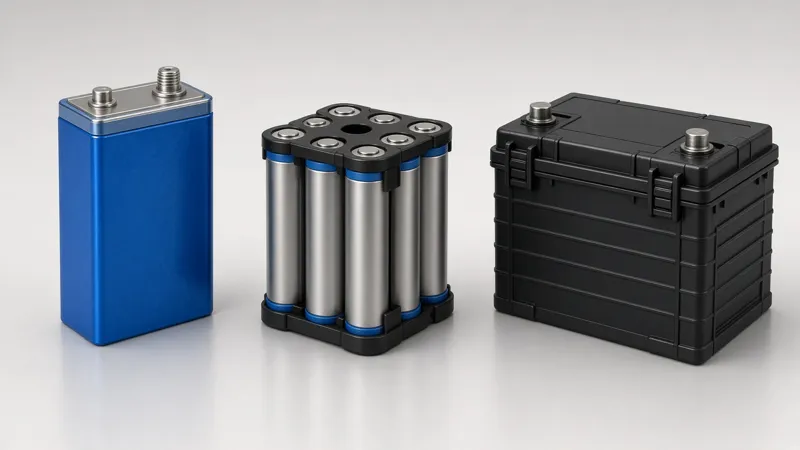
For home, RV and off-grid storage, LiFePO4 (lithium iron phosphate) is now the most common choice. It offers long cycle life, high usable capacity and good thermal stability, but generally shouldn't be charged below freezing without heating. NMC lithium is lighter and common in portable gear. Lead-acid (flooded, AGM, gel) costs less up front, but you can use less of its capacity and it lasts fewer cycles. Compare usable Wh, cycle life to a stated capacity, temperature limits, BMS features and certifications.
- LiFePO4 is the most common chemistry in newer solar batteries and power stations.
- Lead-acid is cheaper up front but heavier, with fewer cycles and lower usable capacity.
- Most lithium batteries should not be charged below freezing unless they have built-in heating.
Why chemistry matters
Battery chemistry affects how much of the rated capacity you can use, how many years the battery lasts, how it handles heat and cold, how much it weighs and how much it costs. Two batteries with the same rated watt-hours can deliver very different usable energy over their life.
Chemistries compared
| LiFePO4 (LFP) | NMC lithium | AGM / gel lead-acid | Flooded lead-acid | |
|---|---|---|---|---|
| Usable depth of discharge | 80–100% | 80–90% | ~50% | ~50% |
| Cycle life (typical claims) | 3,000–6,000+ | 500–2,000 | 300–1,000 | 300–1,500 |
| Weight per Wh | Medium | Low | High | High |
| Cold charging | Not below ~0 °C without heat | Limited; check datasheet | Possible with temperature compensation | Possible with compensation; slower |
| Maintenance | None | None | None | Water top-ups, venting |
| Upfront cost per Wh | Higher | Higher, varies by product | Low | Lowest |
Cycle life figures are ranges from manufacturer claims and vary widely by product and test conditions. Read each datasheet.
LiFePO4 in more detail
LiFePO4 has become the standard for stationary storage. Its chemistry is more thermally stable than many other lithium types, which reduces the risk of thermal runaway. It keeps a fairly flat voltage across most of its charge, so devices see steady voltage until near empty.
Most LiFePO4 batteries include a BMS that cuts off charging below a certain temperature, often around 0 °C (32 °F), to protect the cells. Self-heating models exist for cold climates. Nominal voltage is about 3.2 V per cell, so a "12 V" battery is 12.8 V nominal.
Lead-acid in more detail
Lead-acid has powered vehicles and off-grid systems for decades. It's inexpensive and tolerant of cold charging with temperature compensation. But regularly discharging below about 50% shortens its life considerably, so a lead-acid bank needs roughly twice the rated capacity of lithium for the same usable energy.
Flooded batteries need water top-ups and ventilation for hydrogen gas released during charging. AGM and gel are sealed and maintenance-free, but more sensitive to overcharging.
Comparing lifetime cost
A useful comparison is cost per usable kWh over the battery's life: price ÷ (rated kWh × usable DoD × cycle life). Because LiFePO4 offers more usable capacity and more cycles, its lifetime cost per kWh is often lower than lead-acid, even though upfront cost is higher. Use the datasheets' numbers and your own expected cycling.
Certifications and safety
For home storage, look for listings such as UL 9540 (energy storage systems) and UL 1973 (batteries for stationary use). Installations fall under codes like NFPA 855 and local rules, which may limit where and how much storage can go in a home. Permits often apply.
Worked scenarios
Scenario 1: off-grid cabin used weekends
LiFePO4 with a self-heating option if winters are cold. Long life suits daily cycling.
Scenario 2: occasional backup, tight budget
AGM may be enough for rare use, but plan for 50% usable capacity.
Scenario 3: portable use
NMC or LFP power stations. LFP for longer life, NMC for lighter weight.
See how to size a battery bank and the power planner.
Reading a battery datasheet
Battery datasheets can look intimidating, but a few lines matter most for planning.
Nominal voltage and capacity give you watt-hours: multiply volts by amp-hours. A 12.8 V 100 Ah LiFePO4 battery stores 1,280 Wh.
Cycle life is usually stated as a number of cycles to a certain remaining capacity, such as 4,000 cycles to 80% at a stated depth of discharge and temperature. Compare batteries at the same conditions, because a rating at 50% DoD looks much better than one at 100% DoD.
Continuous and peak discharge current tell you how much current the BMS allows. That must cover your inverter's draw. See inverter sizing and surge.
Charge and discharge temperature ranges tell you where the battery can work. LiFePO4 often lists charging from about 0 °C and discharging from below freezing.
Charging parameters list the recommended voltages for charging and float. Your charger or controller should match them.
Certifications such as UL 1973 or UL 9540 indicate the product was evaluated to a safety standard.
Temperature and where batteries live
Every chemistry has a comfort zone. Heat speeds up aging in both lithium and lead-acid batteries, so a battery in a hot attic or a sun-baked enclosure will wear out faster than one in a cool basement or garage. Cold reduces available capacity and limits charging, especially for lithium.
Where you put the battery is also a safety and code matter. Codes like NFPA 855 and local rules may limit installs in living spaces, require separation from doors and windows, or call for specific rooms like garages. Flooded lead-acid batteries need ventilation for hydrogen. Follow the manufacturer's installation guide, and have home systems designed and inspected as required.
End of life and recycling
All batteries eventually wear out. Lead-acid batteries are widely recycled, and many retailers that sell them take old ones back. Lithium batteries also need proper recycling and should not go in household trash, where damaged cells can cause fires. The EPA and local waste agencies list drop-off options, and some manufacturers run take-back programs. Tape terminals or bag batteries individually before transport, and never ship or handle swollen or damaged lithium batteries casually. Ask your local hazardous waste program for instructions.
Common mistakes
- Comparing rated Wh without usable DoD.
- Charging lithium below freezing.
- Mixing chemistries or ages in one bank.
- Using a lead-acid charging profile on lithium.
- Skipping certifications for home installs.
Anything connected to home wiring should be designed and installed by a licensed electrician. See solar and battery safety and picks on the deals page.
FAQ
Can I mix LiFePO4 and lead-acid?
Generally not in the same bank. They charge at different voltages and behave differently. Most manufacturers advise against it.
What is a BMS?
A battery management system protects lithium cells from overcharge, over-discharge, overcurrent and temperature extremes, and balances cells.
Is sodium-ion an option?
Sodium-ion batteries are emerging in some products. They work better in the cold but have lower energy density. Check availability and specs.
Do lithium batteries need special chargers?
They need a charger or charge controller with a profile matched to their chemistry. Many controllers include LiFePO4 settings.
Where do I go next?
Try the power planner to put numbers to your own situation, or see the product picks on the deals page.
Terms used here
- Watt (W)
- Rate of power use or production.
- Watt-hour (Wh)
- Energy: one watt for one hour.
- Kilowatt-hour (kWh)
- 1,000 watt-hours.
- Amp-hour (Ah)
- Battery charge capacity at a given voltage.
- Depth of discharge (DoD)
- Share of a battery's capacity that is used.
- Cycle life
- Number of charge-discharge cycles a battery is rated for at a stated DoD.
- LiFePO4 (LFP)
- Lithium iron phosphate battery chemistry.
- NMC
- Nickel manganese cobalt lithium chemistry.
- AGM
- Absorbent glass mat sealed lead-acid battery.
- BMS
- Battery management system that protects cells.
- Inverter
- Converts DC battery power to AC household power.
- Charge controller
- Regulates charging from panels to battery.
Sources
This guide is informational and based on published specifications and general references, not hands-on testing. Check the manufacturer's current specs before you buy.