Head to Head: EcoFlow RIVER 3 vs Anker SOLIX C1000
Small and light, or a kilowatt-hour? How to tell whether a 245Wh station is enough.
Published · Updated
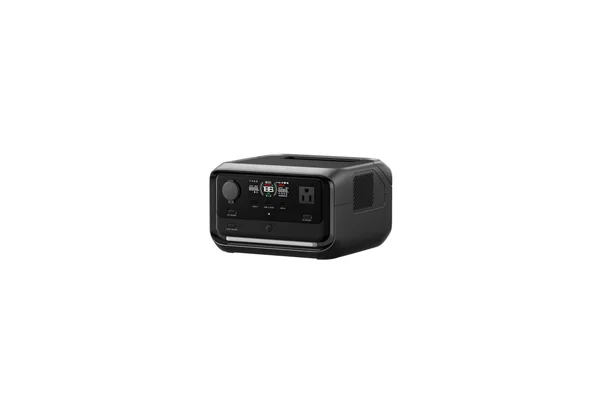
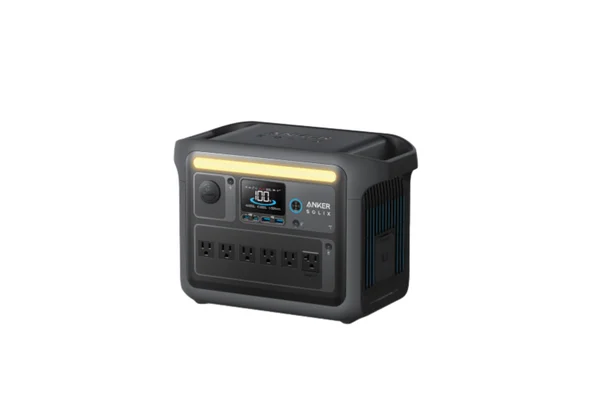
The RIVER 3 (245Wh, 300W, about 7.7 lb) charges electronics and runs Wi-Fi; the C1000 (1,056Wh, 1,800W, 28.4 lb) runs a fridge and kitchen gear. Pick by your biggest load.
- Your biggest load decides: 300W vs 1,800W.
- About 4× the capacity in the C1000.
- The RIVER 3 weighs about a quarter as much.
Specs side by side
Manufacturer figures, copied from the sources below; the usable row is our estimate.
| Spec | EcoFlow RIVER 3 | Anker SOLIX C1000 |
|---|---|---|
| Rated capacity | 245Wh | 1,056Wh |
| Estimated usable (AC) | ≈180Wh (estimate) | ≈777Wh (estimate) |
| Battery | LiFePO4, 3,000 cycles to 80% | LiFePO4, 3,000 cycles to 80%+ |
| AC output | 300W (X-Boost 600W, surge 600W) | 1,800W (surge 2,400W, SurgePad up to 2,400W) |
| Wall charging | Up to 320W, 0–100% in about 60 min (US) | Up to 1,300W, 0–100% in 58 min (HyperFlash) |
| Solar input | 110W max, 11–30V | 600W max, 11–60V |
| Weight | About 7.7 lb (3.5 kg) | 28.4 lb (12.9 kg) |
| Backup switchover | <20 ms switchover | Under 20 ms (UPS mode) |
| Expansion | Not expandable | Expandable to 2,112Wh with an expansion battery |
Where they differ
- Loads: anything over 300W (fridges, kettles, microwaves) needs the C1000.
- Runtime: ≈180 vs ≈777 Wh usable (estimates).
- Portability: the RIVER 3 by far.
Who should buy which
Buy the RIVER 3 for camping, day trips and router or phone backup. Buy the C1000 for outages where the fridge matters.
FAQ
Where can I see the full specs?
See the EcoFlow RIVER 3 Spec Check and the Anker SOLIX C1000 Spec Check.
Where do I go next?
Try the power planner to put numbers to your own situation, or see the product picks on the deals page.
Terms used here
- Watt (W)
- Rate of power use or production.
- Watt-hour (Wh)
- Energy: one watt for one hour.
- Kilowatt-hour (kWh)
- 1,000 watt-hours.
- LiFePO4 (LFP)
- Lithium iron phosphate battery chemistry.
Sources
This guide is informational and based on published specifications and general references, not hands-on testing. Check the manufacturer's current specs before you buy.