Spec Check: EcoFlow RIVER 3
EcoFlow's published RIVER 3 specs (245Wh, 300W, LiFePO4) and what they mean in usable watt-hours.
Published · Updated
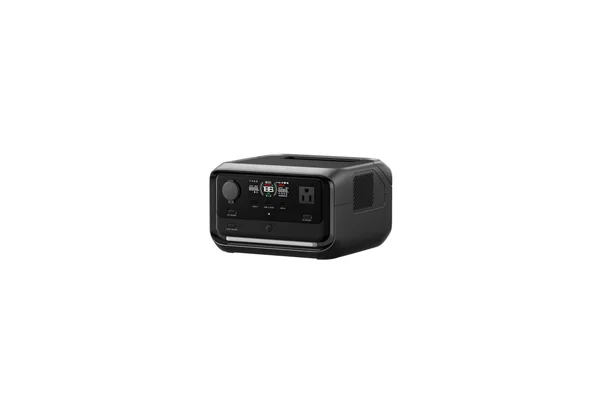
The RIVER 3 is a 245Wh LiFePO4 station with one 300W AC outlet (600W X-Boost for heating devices), 110W solar input and a weight of about 7.7 lb, per EcoFlow. We estimate about 180 Wh usable through AC.
- 245Wh LiFePO4, rated 3,000 cycles to 80%.
- 300W AC: phones, laptops, Wi-Fi, lights, low-draw CPAP.
- Estimated ≈180 Wh usable via AC.
Manufacturer specs
Figures below come from the manufacturer pages listed under Sources, copied as published. We have not measured these units.
| Spec | EcoFlow RIVER 3 |
|---|---|
| Rated capacity | 245Wh |
| Estimated usable (AC) | ≈180Wh (estimate) |
| Battery | LiFePO4, 3,000 cycles to 80% |
| AC output | 300W (X-Boost 600W, surge 600W) |
| Wall charging | Up to 320W, 0–100% in about 60 min (US) |
| Solar input | 110W max, 11–30V |
| Weight | About 7.7 lb (3.5 kg) |
| Backup switchover | <20 ms switchover |
| Expansion | Not expandable |
Usable capacity: our estimate
Estimated usable AC energy: 245 Wh × 0.80 × 0.92 ≈ 180 Wh. That's our estimate (80% usable depth from Victron's LiFePO4 data, 92% inverter efficiency from NREL's PVWatts manual; an estimate for this unit), not a measurement. Real results vary with load size, temperature and the unit's own idle draw. DC and USB loads skip the inverter loss.
| Example load | Est. runtime |
|---|---|
| 15 W | ≈12.0 h |
| 60 W | ≈3.0 h |
| 150 W | ≈1.2 h |
| 250 W | ≈0.7 h |
Run your own loads through the Power Planner.
What the specs mean
300W AC rules out fridges, kettles and most kitchen gear. X-Boost lets heating devices up to 600W run at reduced power. 110W solar means one small folding panel. The <20 ms switchover lets it sit in front of a router.
Who it suits
Someone who wants a light grab-and-go unit for camping, a router backup or charging electronics in an outage.
FAQ
Can the RIVER 3 run a fridge?
No. Its 300W AC rating is too low for a fridge compressor.
Where do I go next?
Try the power planner to put numbers to your own situation, or see the product picks on the deals page.
Terms used here
- Watt (W)
- Rate of power use or production.
- Watt-hour (Wh)
- Energy: one watt for one hour.
- Depth of discharge (DoD)
- Share of a battery's capacity that is used.
- LiFePO4 (LFP)
- Lithium iron phosphate battery chemistry.
- Inverter
- Converts DC battery power to AC household power.
- Derate
- Factor for real-world losses in solar output.
Sources
This guide is informational and based on published specifications and general references, not hands-on testing. Check the manufacturer's current specs before you buy.