Off-Grid Builds: an RV lithium and solar upgrade
Swap an RV's lead-acid batteries for Group 24 LiFePO4, add roof solar and a 1,000W inverter for boondocking.
Published · Updated
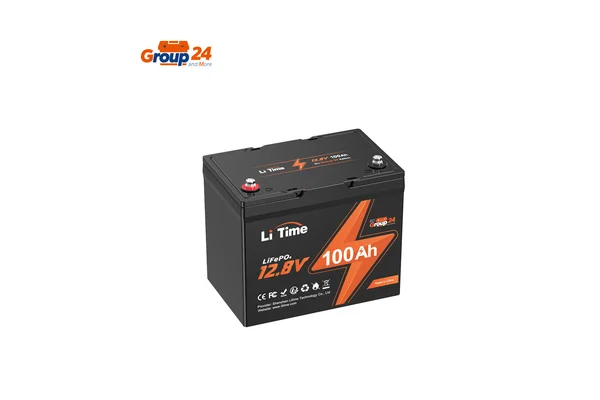
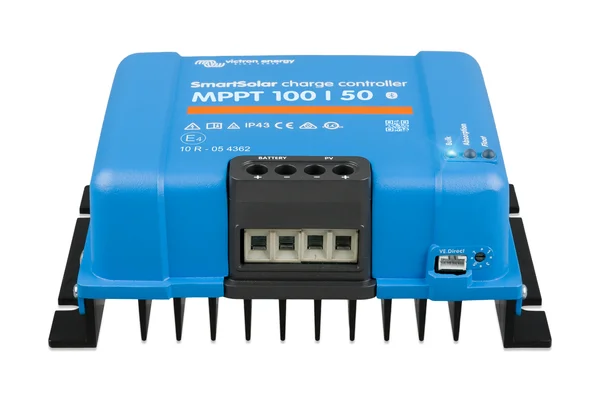
For about 1,300 Wh a day while boondocking, our sample uses 3 × Group 24 12V 100Ah LiFePO4 (3,840 Wh), 600W of roof solar, a Victron 100/50 MPPT and a 1,000W inverter.
- Group 24 batteries fit many existing RV battery trays.
- Check the RV converter's lithium charging profile.
- About 1,300 Wh/day for lights, furnace fan, water pump and electronics (example).
The load list
Example loads; replace them with yours in the Power Planner.
| Device | Watts × hours | Wh/day |
|---|---|---|
| Furnace blower (example) | 60 W × 4 h | 240 |
| Lights | 30 W × 5 h | 150 |
| Water pump | 60 W × 0.5 h | 30 |
| TV and electronics | 100 W × 4 h | 400 |
| Fridge controls, alarms, standby loads (example) | 20 W × 24 h | 480 |
| Total | 1,300 |
Sizing math
Battery: 1,300 Wh/day × 2 day(s) of autonomy ÷ 0.92 inverter ÷ 0.80 usable ≈ 3,533 Wh (0.92 from the NREL PVWatts manual, 0.80 from Victron LiFePO4 data). 3 × 12V 100Ah LiFePO4 batteries (1,280 Wh each: 12.8V × 100Ah) give 3,840 Wh as a 12V bank. See how to size a battery bank.
Solar: 1,300 Wh ÷ (4 peak sun hours × 0.77, the PVWatts V1 derate) ≈ 422 W of panels. We use 600W. Check your site's sun hours in NREL PVWatts and size for your worst month. See solar panel sizing.
Controller: 600W fits the Victron 100/50 (700W nominal on 12V).
Inverter: 1,000W covers TVs and electronics. A roof air conditioner or microwave needs a much larger inverter and bank, or the generator.
Parts list
The main parts. Size fuses, breakers and cable from each maker's manual and a wire-gauge table.
LiTime 12V 100Ah LiFePO4 battery (Group 24)
Group 24 size for many RV battery trays; use three (check tray space).
Check price on Amazon (opens in a new tab)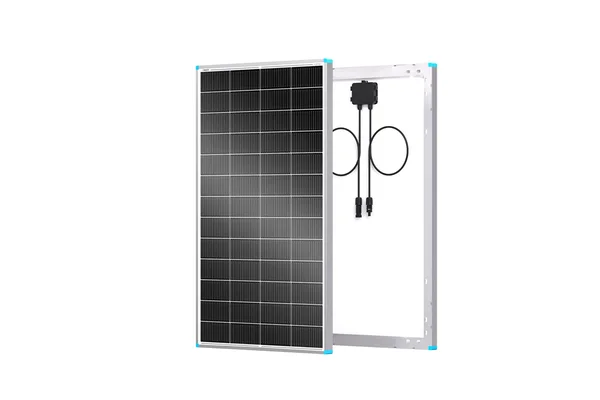
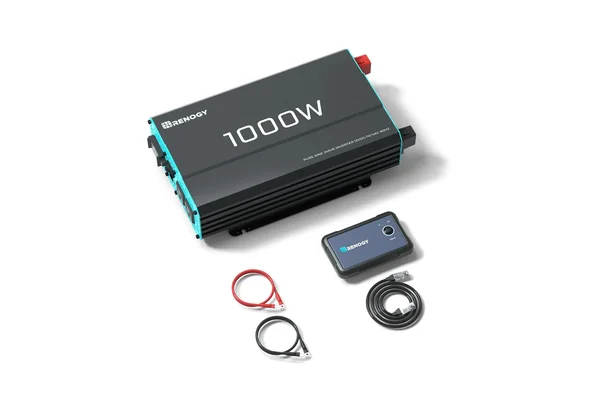
Renogy P2 1000W pure sine inverter (12V)
1,000W pure sine inverter.
Check price on Amazon (opens in a new tab)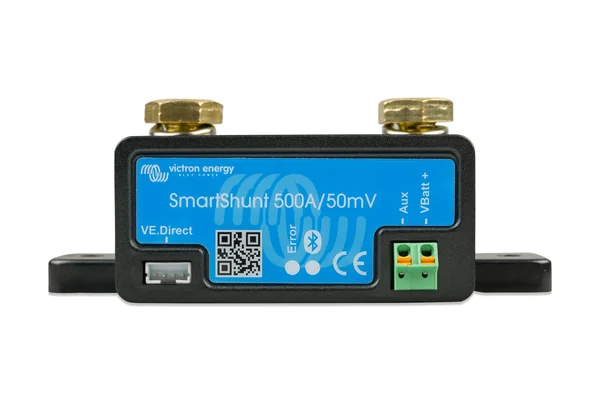
Victron SmartShunt 500A battery monitor
Replaces the RV's basic battery indicator.
Check price on Amazon (opens in a new tab)Wiring outline
Roof panels → roof entry → PV breaker → MPPT → batteries via the RV's main fuse. Check the converter/charger supports lithium. Inverter fused at the battery; feed only a dedicated outlet unless an RV technician adds a transfer switch.
This is a planning outline, not a wiring diagram. Follow each manufacturer's manual, fuse every positive conductor close to the battery, and have a qualified installer check the work. Local codes apply to buildings and vehicles.
FAQ
Will my RV converter charge lithium?
Some do, some need a lithium setting or replacement. Check the converter's manual and the battery's charge voltage.
Where do I go next?
Try the power planner to put numbers to your own situation, or see the product picks on the deals page.
Terms used here
- Watt (W)
- Rate of power use or production.
- Watt-hour (Wh)
- Energy: one watt for one hour.
- LiFePO4 (LFP)
- Lithium iron phosphate battery chemistry.
- Inverter
- Converts DC battery power to AC household power.
- MPPT
- Maximum power point tracking controller.
- Peak sun hours
- Hours of equivalent 1,000 W/m² sunlight per day.
- Derate
- Factor for real-world losses in solar output.
- Transfer switch
- Device that isolates home circuits from the grid during backup.
Sources
This guide is informational and based on published specifications and general references, not hands-on testing. Check the manufacturer's current specs before you buy.