Off-Grid Builds: a solar shed workshop
Power tools have big surges. A sample 12V shed system with a 2,000W inverter, a battery bank sized for the current, and solar.
Published · Updated
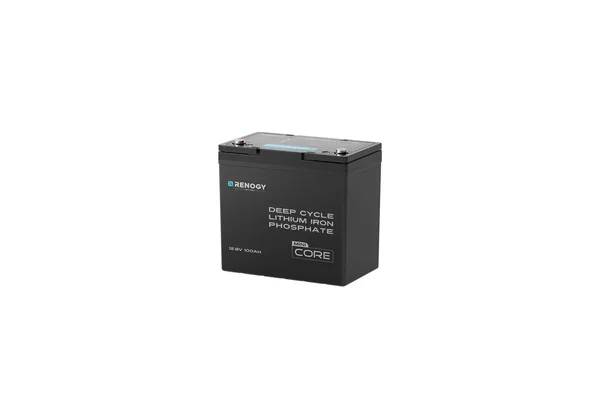
For about 900 Wh a day of tool and light use, our sample uses 2 × 12V 100Ah LiFePO4 (2,560 Wh), 400W of solar, a 40A MPPT and a 2,000W pure sine inverter. With tools, the inverter and current limits are the hard part, not the battery size.
- Tools draw a lot for minutes at a time.
- Check each battery's continuous discharge rating against inverter current.
- A 2,000W inverter at 12V draws roughly 181A at full load (at 92% efficiency).
The load list
Example loads; replace them with yours in the Power Planner.
| Device | Watts × hours | Wh/day |
|---|---|---|
| Circular saw (example) | 1,400 W × 0.25 h | 350 |
| Tool battery charging | 200 W × 1 h | 200 |
| LED shop lights | 60 W × 4 h | 240 |
| Radio, phone | 30 W × 4 h | 120 |
| Total | 910 |
Sizing math
Battery: 900 Wh/day × 2 day(s) of autonomy ÷ 0.92 inverter ÷ 0.80 usable ≈ 2,446 Wh (0.92 from the NREL PVWatts manual, 0.80 from Victron LiFePO4 data). 2 × 12V 100Ah LiFePO4 batteries (1,280 Wh each: 12.8V × 100Ah) give 2,560 Wh as a 12V bank. See how to size a battery bank.
Solar: 900 Wh ÷ (4 peak sun hours × 0.77, the PVWatts V1 derate) ≈ 292 W of panels. We use 400W. Check your site's sun hours in NREL PVWatts and size for your worst month. See solar panel sizing.
Controller: 400W ÷ 12V ≈ 33A; a 40A MPPT fits.
Inverter: a 2,000W unit pulls about 2,000 ÷ 12 ÷ 0.92 ≈ 181A at full load (0.92 is the NREL PVWatts inverter derate, an estimate for battery inverters; use your inverter's datasheet efficiency). Two batteries in parallel share that; check each battery's published continuous discharge rating and use cable and fuses sized for it. See inverter sizing and surge.
Parts list
The main parts. Size fuses, breakers and cable from each maker's manual and a wire-gauge table.
Renogy 12V 100Ah LiFePO4 battery (mini)
Two in parallel to share the high inverter current.
Check price on Amazon (opens in a new tab)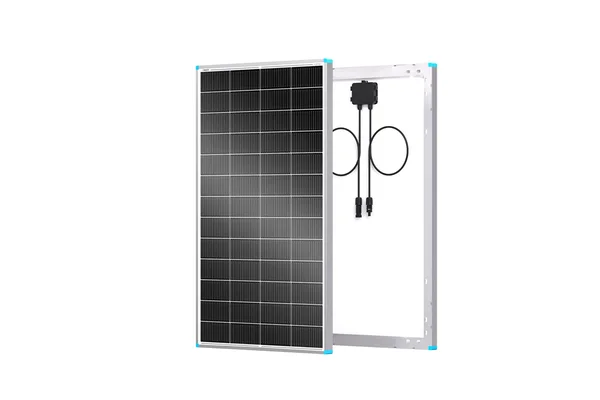
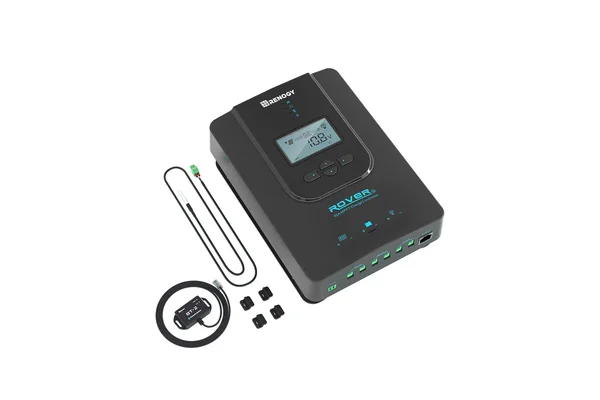
Renogy Rover 40A MPPT charge controller
40A MPPT controller.
Check price on Amazon (opens in a new tab)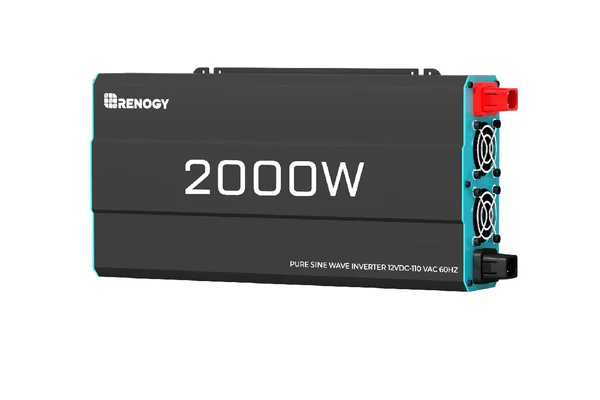
Renogy P2 2000W pure sine inverter (12V)
2,000W pure sine inverter for tool surges.
Check price on Amazon (opens in a new tab)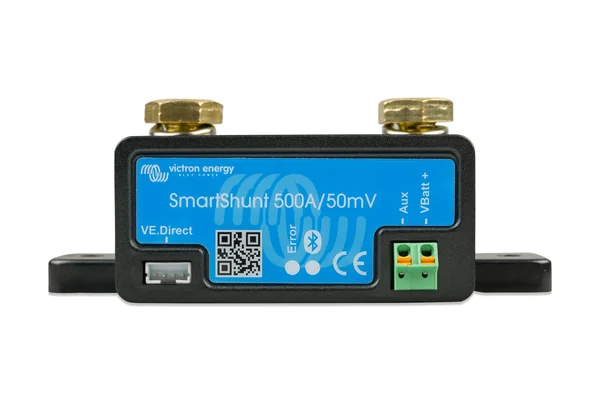
Victron SmartShunt 500A battery monitor
Shows current draw while a tool runs.
Check price on Amazon (opens in a new tab)Wiring outline
Panels → MPPT → bus bar → batteries. The inverter takes short, heavy cables to the bus through a properly rated fuse and disconnect. Keep the batteries in a ventilated, temperature-controlled box; many LiFePO4 batteries can't be charged below freezing.
This is a planning outline, not a wiring diagram. Follow each manufacturer's manual, fuse every positive conductor close to the battery, and have a qualified installer check the work. Local codes apply to buildings and vehicles.
FAQ
Can I run a table saw?
Possibly, if its running and start-up draw stay under the inverter's continuous and surge ratings. Check the saw's label and the inverter's surge figure.
Where do I go next?
Try the power planner to put numbers to your own situation, or see the product picks on the deals page.
Terms used here
- Watt (W)
- Rate of power use or production.
- Watt-hour (Wh)
- Energy: one watt for one hour.
- LiFePO4 (LFP)
- Lithium iron phosphate battery chemistry.
- Inverter
- Converts DC battery power to AC household power.
- Surge rating
- Short-term peak power an inverter can supply.
- Charge controller
- Regulates charging from panels to battery.
- MPPT
- Maximum power point tracking controller.
- Peak sun hours
- Hours of equivalent 1,000 W/m² sunlight per day.
- Derate
- Factor for real-world losses in solar output.
Sources
This guide is informational and based on published specifications and general references, not hands-on testing. Check the manufacturer's current specs before you buy.