Power It Up: backing up a sump pump with a power station
Sump pumps have big start-up surges and run in short bursts. Here's how to size a power station for one during a storm outage.
Published · Updated
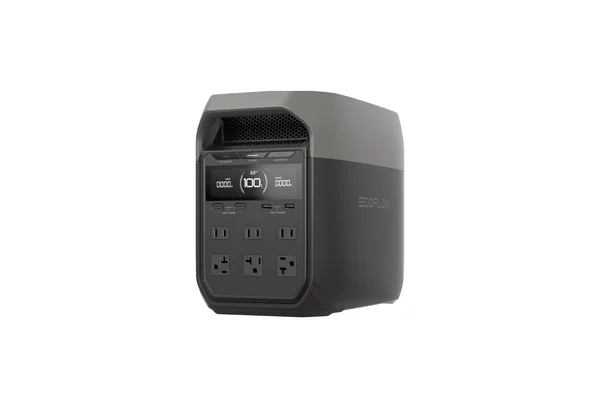
A 1/3 HP sump pump might draw around 800 W while running (example; check the label) plus a start-up surge several times higher. If it runs 15 minutes per hour during a storm, that's about 200 Wh per hour, so a 1kWh-class station covers about 4 hours. Pick a high surge rating, and consider a dedicated battery backup pump too.
- Energy per hour = pump watts × fraction of the hour it runs.
- Surge rating matters more than capacity for the start.
- Run time changes a lot with rainfall; watch yours in a storm.
What a sump pump draws
| Item | Example figure | Where it comes from |
|---|---|---|
| Running draw, 1/3 HP (example) | 800 W | Check the pump label or manual |
| Start-up surge | Several times running watts | Motor start; check the manual |
| Run time per hour in a storm (example) | 15 min | Watch yours in a heavy rain |
| Energy per storm hour | ≈200 Wh | 800 × 0.25 |
How we do the math
Runtime (hours) ≈ usable watt-hours ÷ the device's average watts. Our reference set is five portable power stations whose specs we compiled in the Spec Check series. Estimated usable AC energy (our estimate: usable ≈ rated Wh × 0.80 (usable depth, Victron LiFePO4 data) × 0.92 (inverter, the NREL PVWatts manual derate) ≈ 0.736. Applying these to a power station gives a planning estimate, not a measurement): RIVER 3 ≈180Wh, DELTA 3 ≈754Wh, Anker C1000 ≈777Wh, Jackery 1000 v2 ≈788Wh, BLUETTI AC180 ≈848Wh.
Every device wattage on this page is an example. Read your own device's label or EnergyGuide sticker, or measure it with a plug-in energy meter, then put your number into the Power Planner.
Runtime on each reference station
| Power station | Est. usable Wh | Est. runtime |
|---|---|---|
| EcoFlow RIVER 3 | ≈180 | Not suitable (300W outlet) |
| EcoFlow DELTA 3 | ≈754 | ≈3.8 h |
| Anker SOLIX C1000 | ≈777 | ≈3.9 h |
| Jackery Explorer 1000 v2 | ≈788 | ≈3.9 h |
| BLUETTI AC180 | ≈848 | ≈4.2 h |
The smallest station that fits
The DELTA 3 (3,600W surge) and Jackery 1000 v2 (3,000W surge) have the highest published surge ratings in our reference set, which helps with motor starts. Confirm your pump's start-up draw against the station's surge rating before relying on it.
EcoFlow DELTA 3 (1,024Wh)
The highest published surge in our set (3,600W).
Check price on Amazon (opens in a new tab)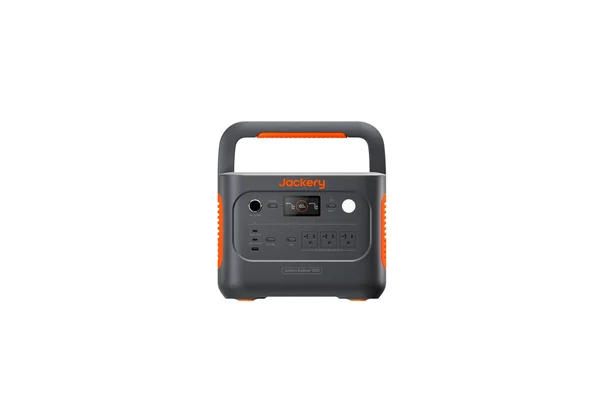
Jackery Explorer 1000 v2 (1,070Wh)
3,000W surge peak in a lighter unit.
Check price on Amazon (opens in a new tab)Belt and braces
A power station has to be plugged in and switched on when the power fails. Many homeowners also install a dedicated battery backup sump pump that switches on automatically. A plumber can advise on what suits your pit.
FAQ
Can a power station start a sump pump?
Often, if its surge rating comfortably exceeds the pump's start-up draw. Check the pump's manual for start-up watts or amps.
Where do I go next?
Try the power planner to put numbers to your own situation, or see the product picks on the deals page.
Terms used here
- Watt (W)
- Rate of power use or production.
- Watt-hour (Wh)
- Energy: one watt for one hour.
- Depth of discharge (DoD)
- Share of a battery's capacity that is used.
- LiFePO4 (LFP)
- Lithium iron phosphate battery chemistry.
- Inverter
- Converts DC battery power to AC household power.
- Surge rating
- Short-term peak power an inverter can supply.
- Derate
- Factor for real-world losses in solar output.
Sources
This guide is informational and based on published specifications and general references, not hands-on testing. Check the manufacturer's current specs before you buy.